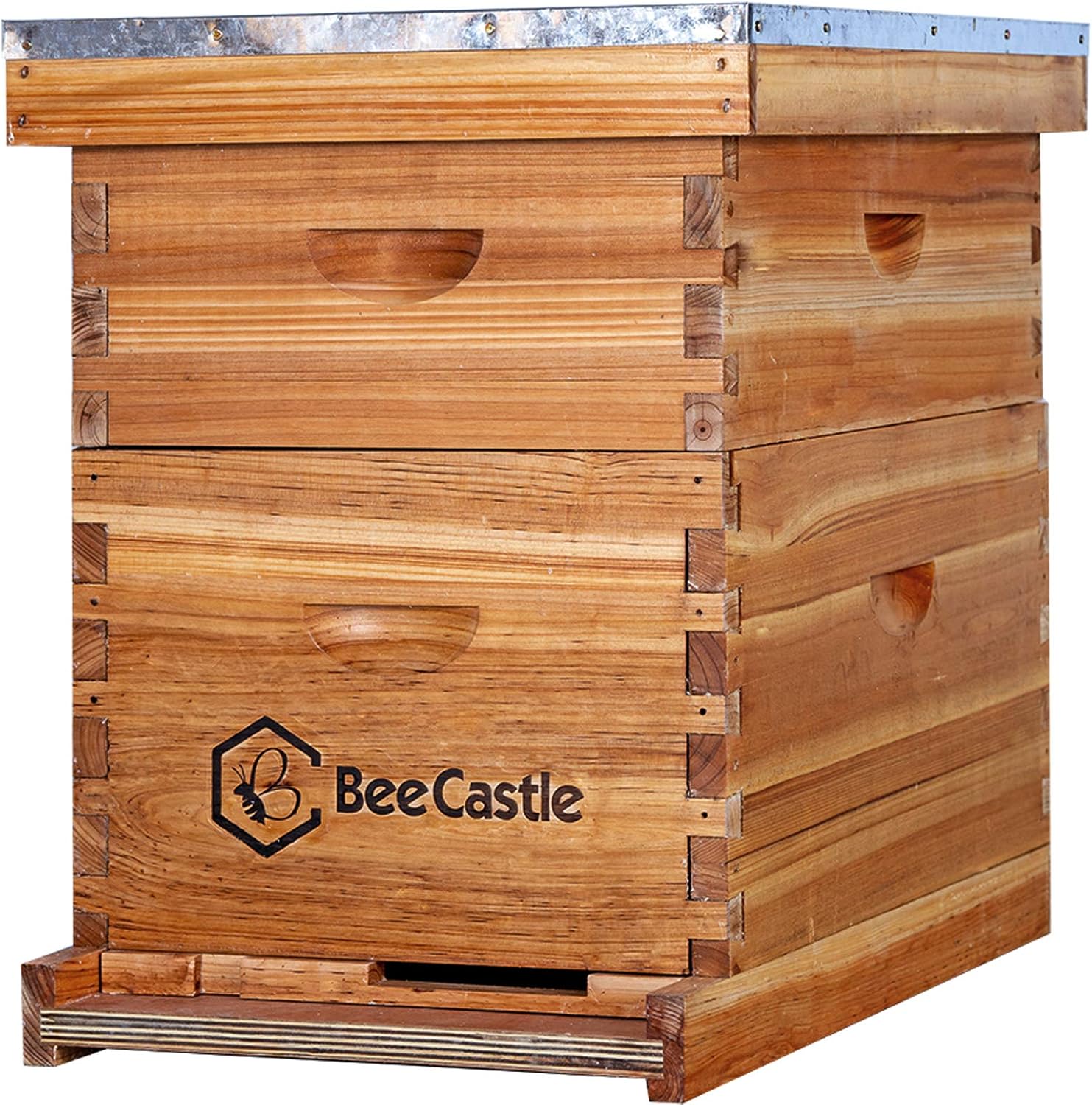
Wooden vs Poly Beehives: Insulation, Compatibility and Care
Choose between wooden and poly beehives by comparing complete systems: insulation, frame fit, loaded weight, cleaning, repairs and local replacement parts. Expanded-polystyrene boxes offer built-in insulation, while a suitable wooden system may fit the equipment and maintenance methods you already use. Neither material guarantees colony survival, a bigger honey crop or compatibility with another manufacturer’s boxes.
For a first hive, local support and reliable parts can matter as much as the material. For an existing apiary, the most useful question is what problem a change would solve and what new work it would create.
Define “poly” before comparing products
This guide uses poly hive to mean hive equipment made from expanded polystyrene, often abbreviated EPS. Do not assume that every plastic, foam-filled or insulated hive uses that material. Polyurethane insulation and a rigid plastic outer shell are different construction choices.
Ask the seller to identify the body material, wall construction, reinforced working surfaces and required coating. A general description such as “insulated hive” does not answer those questions.
Wooden equipment varies too. Timber species, wall thickness, joints, assembly quality and exterior protection all affect the particular box you receive. Compare the actual models and the same frame standard, rather than an idealized version of either material.
If you are deciding among different hive systems, start with our beginner hive-type comparison. Choosing Langstroth, National or another format is a separate decision from choosing the material used to build it.
Insulation: useful, but compare the whole arrangement
Betterbee’s explanation of polystyrene hive equipment identifies insulation as a principal reason to choose it. The structure reduces heat transfer through the walls compared with typical thin wooden boxes.
That does not give every poly product the same performance. Wall thickness, the roof, floor, openings, joints and the way the colony is managed form one system. A wooden hive with a deliberate insulation arrangement should not be compared with a bare wooden box as though they were identical setups.
Ask what the proposed configuration includes and how it is used in your local climate. Avoid mixing pieces of winter advice that were developed for different ventilation or insulation arrangements.
Read research without changing the material tested
A 2026 USDA Agricultural Research Service study compared polyurethane hives with wooden hives and reported differences in the internal environment and weight change. It did not find differences in the measured brood, mite or virus outcomes between groups.
That study concerns polyurethane equipment, not a controlled comparison of every EPS product. The reasonable takeaway is that construction can affect the hive environment; it is not evidence that a polystyrene box cures disease or guarantees a better harvest.
Our winter-preparation guide puts insulation alongside food access, colony health and timely mite management. Changing the wall material does not remove those jobs.
Weight: handle the box you will actually lift
A lighter empty body can help, but the working load also includes frames, comb, bees and stores. Compare the empty weights of the exact models, then plan for the same loaded frame capacity. Do not compare an empty poly super with a full wooden brood box.
Check the handholds while wearing your intended gloves. Can you obtain a secure grip? Do latches, rebates or projecting edges affect how the box is separated, carried and set down? Try an empty setup before the bees arrive, and plan help for loads beyond your ability.
Eight-frame versus ten-frame equipment and box depth are also relevant to handling. A different capacity may address a lifting problem more directly than changing the material while keeping the same heavy load.
Include working height in the decision. Equipment must remain manageable when another super is added and when brood inspections require boxes to be moved. Use the hive-placement checklist to plan stable access and space to set equipment.
Compatibility: check the interfaces, not just the name
Two boxes can accept the same frame style while having different outside dimensions or joining surfaces. Check the roof, floor, inner cover, feeder, excluder and any latches as well as the brood and super bodies.
For a concrete UK example, Abelo’s 12-frame National range identifies components that fit that system and explicitly excludes its other named National poly ranges. “National” on both labels is not enough to establish a fit. This example illustrates the buying check; it is not a recommendation that a Langstroth beekeeper switch systems.
Ask for confirmation covering your exact existing model and the proposed part. If the seller describes compatibility with wooden equipment, clarify which wooden standard, box depth and accessory arrangement they mean.
A practical fit check before installation
Assemble the planned stack without bees. Seat frames, the feeder and excluder where intended, then fit the cover. Look for unsupported edges, rocking, unexpected gaps and components that prevent the next piece from seating correctly.
A visual fit check does not replace the maker’s confirmation about bee space and intended use. Keep the model identifier, instructions and seller’s answer with your equipment record so replacement orders refer to a specific system.
Painting, repairs and ordinary maintenance
Exterior protection
Poly does not automatically mean paint-free. Betterbee’s painting guidance calls for appropriate exterior latex coatings on its Lyson and BeeMax polystyrene equipment. Follow the instructions for the product you buy, including any factory finish and drying or curing requirements.
Do not carry a coating method from wood to EPS without checking suitability. Some products intended for one surface can damage another. The UK Health and Safety Executive’s guidance also states that wood preservatives labeled harmful to bees must not be used on hives. Check relevant labels and local requirements wherever you keep bees.
Wear and repair
Inspect wooden joints, fasteners, corners and frame rests for deterioration or damage. On poly equipment, inspect the working edges, handholds, inserts, latches and any damaged areas in the molded body. Do the components still seat squarely and support their intended load?
Repair choices depend on the model and the location of the damage. Abelo’s polystyrene repair filler is an example of a material-specific product. Its existence does not mean every crack or damaged lifting point should be filled and returned to service. Ask the manufacturer when replacement is necessary.
Our hive-tool guide covers controlled leverage. Learn where a particular box is intended to take tool pressure instead of prying against an unsupported edge.
Cleaning and disease control need a separate plan
Removing wax and propolis is ordinary cleaning. It does not establish that equipment is disinfected against a particular disease. Before buying either material, ask which cleaning methods the manufacturer permits and what your local apiary authority requires if disease is suspected.
Utah State University’s equipment-hygiene guidance emphasizes selecting methods for the material and consulting an inspector for serious disease concerns. Do not apply a blowtorch to polystyrene or assume a wooden-box heat procedure is suitable for foam, coatings, plastic fittings or an assembled mixed-material hive.
Keep suspect equipment separate while getting advice. Do not make bleach or acid mixtures from an online comment, and do not assume that clean-looking secondhand equipment has a safe disease history. A low purchase price can become poor value if the equipment cannot be prepared for use appropriately.
Compare a complete first-year shopping list
For each option, write down what is included and what you must obtain separately: housing, compatible frames and foundation, feeding arrangement, excluder if needed, protective equipment, tools and initial finishing supplies.
Then check the next likely purchases. What will another brood body or super cost to obtain and finish? Is a replacement floor or feeder readily available locally? Can a club or nearby supplier provide the correct spare if something breaks during the season?
Compare delivered totals for the same working setup. An assembled, finished box and a flat-packed or unfinished box involve different preparation. Ask about the actual delivery configuration rather than inferring it from the material name.
Use our starter-kit buying checklist to identify gaps. Keep funds available for colony care, not just the housing purchase. No fixed prices, lifetime guarantees or BeeKeeperGear comparative field tests are claimed in this guide.
Questions about wooden vs poly beehives
Is a poly hive always better for winter?
No single material choice establishes a winter outcome. Compare the complete insulation and moisture arrangement, colony health, food access and local management plan.
Can I mix wooden and poly boxes?
Only where the exact components are intended to work together. Check dimensions, mating surfaces, frame fit and accessories. A shared frame name is insufficient confirmation.
Do poly hives need painting?
Many require a suitable protective coating, while some products arrive finished. Follow the current manufacturer’s directions for the exact model and coating.
Which material lasts longer?
There is no defensible universal lifespan for every product and climate. Construction, handling, exposure, finishing and repairability change the answer. Inspect the equipment and ask about supported repairs.
Should I replace sound wooden hives immediately?
Define the problem first. Improving an existing setup or trialing one compatible unit may be more useful than replacing an entire apiary without a comparison plan. Keep colony management consistent enough to evaluate the change.
Sources and product examples checked November 10, 2026. Confirm exact materials, compatibility and current care instructions before purchase.
Equipment Mentioned in this Guide