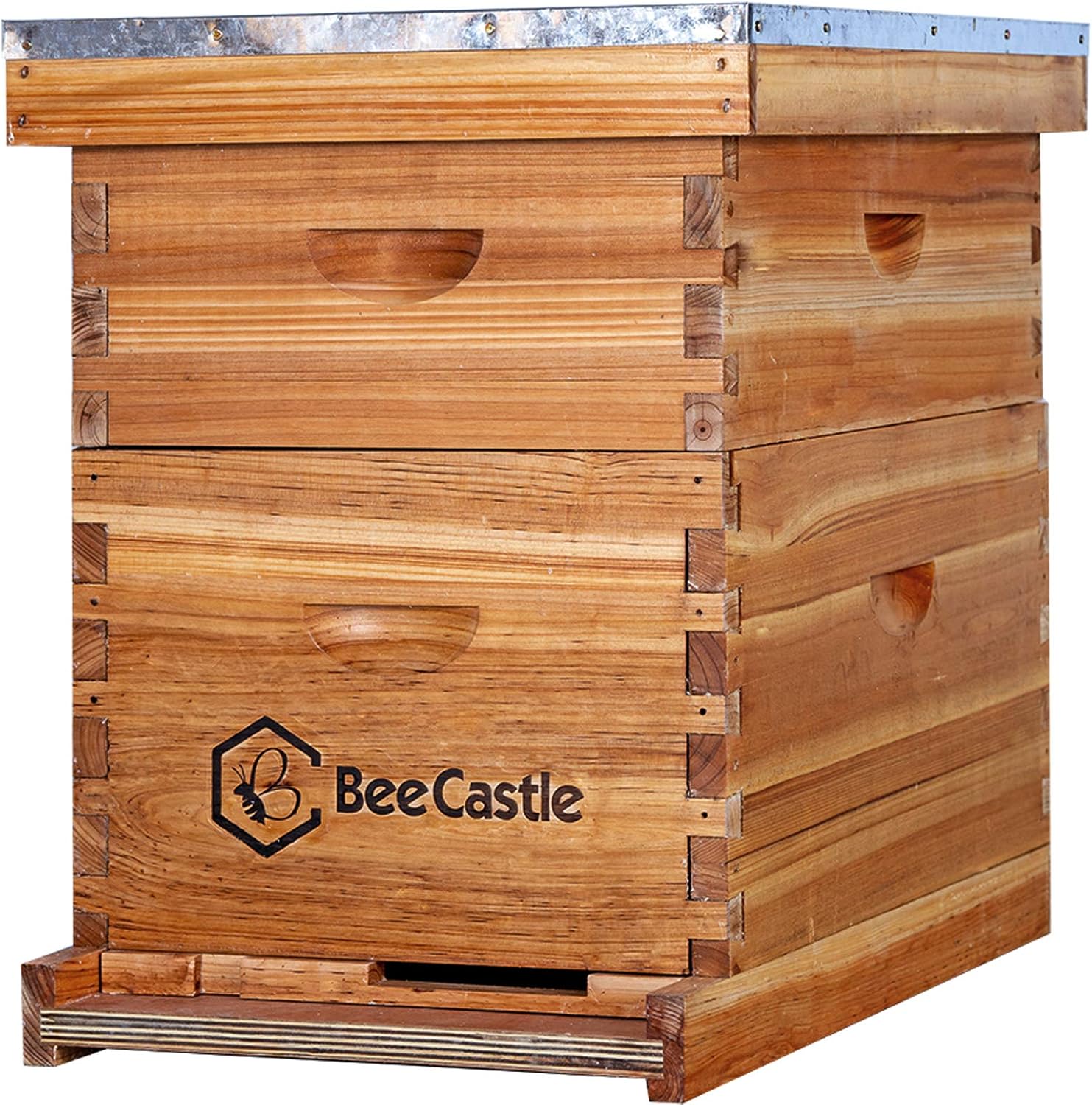
Where to Place a Beehive: 12 Things to Check First
Where to Place a Beehive: Sun, Shade, Wind, Water & Entrance Direction
You can buy the right hive, assemble every frame perfectly and still make your first season harder by putting the colony in the wrong corner of the yard.
The best-looking spot from your kitchen window is not necessarily the easiest place to carry heavy supers, conduct inspections or share space with thousands of flying bees.
Quick answer: A good beehive location usually has dry stable ground, a clear flight path, appropriate sunlight for the local climate, protection from strong prevailing winds, reliable water nearby, easy beekeeper access and enough separation from regular human or animal traffic. South- or southeast-facing entrances are commonly recommended in temperate regions, but entrance direction and sunlight should be adapted to climate and site conditions rather than treated as universal rules.
1. Start With the Flight Path
Stand where the entrance will be and look outward.
Avoid pointing directly toward:
- doors
- patios
- play areas
- busy walkways
- livestock pens
- neighbor seating areas
USU suggests clear space in front of a hive in its beginner guidance. Treat the exact distance as regional advice rather than a universal legal requirement.
A hedge or fence can encourage bees to gain altitude sooner where space is tight.
2. Sun vs Shade
Cooler and temperate climates
Morning sun can help warm the hive and keep the site drier.
USU recommends substantial early-day sun for its regional conditions.
Very hot climates
Mississippi State points out that full sun in very hot, humid climates can increase the colony's cooling workload.
Morning sun with some afternoon protection may make more sense.
Choose sunlight for your climate—not according to one universal internet rule.
3. Which Direction Should the Entrance Face?
South or southeast is a useful starting recommendation in many temperate guides.
But safe flight path, drainage and access matter more than compass perfection.
A southeast entrance aimed directly at a patio is worse design than another direction with safer traffic.
4. Provide Water Early
Colonies use water for cooling and brood-related needs.
Provide a dependable source before the bees establish a habit of visiting:
- swimming pools
- fountains
- pet bowls
- neighboring water features
Use stones, gravel, floats or textured landing surfaces so bees can drink without drowning easily.
5. Think Beyond Nearby Flowers
A hive does not need to sit inside a flower bed.
Evaluate the broader landscape:
- spring bloom
- summer nectar
- autumn forage
- native plants
- crops
- pesticide exposure
- likely dearth periods
Flowers beside the hive do not guarantee a honey crop.
6. Protect From Persistent Wind
MAAREC and Mississippi State recommend wind protection.
Possible windbreaks include:
- hedges
- shrubs
- buildings
- terrain
Do not create a sealed damp pocket simply to stop airflow.
7. Avoid Flood-Prone Ground
Choose a location that remains accessible after rain.
Avoid low hollows, mud and places where water consistently collects beneath the stand.
8. Raise the Hive on a Stable Stand
A stand can improve working height and reduce direct contact with ground moisture.
USU uses roughly 12–18 inches in its regional setup guidance, but your ideal height depends on:
- your body
- hive configuration
- flood risk
- animals
- final stack height
Remember: a comfortable stand with one brood box may become awkward after several supers are added.
9. Level and Stabilize the Hive
Side-to-side stability matters.
Some equipment designs use slight forward drainage, but do not invent a universal angle. Follow the bottom-board/hive design where relevant.
10. Plan Beekeeper Access
MAAREC emphasizes beekeeper accessibility.
Ask whether you can reach the hive while carrying:
- full honey supers
- syrup
- replacement equipment
- tools
Is the path usable after rain? Can you bring a cart? Is there working room behind the hive?
11. Leave Space to Work and Expand
A horizontal top-bar hive needs different space than a vertical Langstroth stack.
If you're still choosing equipment, see Best Beehive for Beginners.
Leave room to stand, remove boxes and add supers.
12. Secure the Hive
Use a stable stand and, where needed, straps or appropriate top weight to protect against wind and animals.
Avoid unstable improvised objects that become hazards during inspections.
Pest Considerations
Placement can influence some pest pressure, but sun exposure does not replace pest management.
If you discover larvae, webbing or slime, use Wax Moth vs. Small Hive Beetle to identify the problem.
Robbing Considerations
Hive direction does not prevent robbing.
Avoid exposed honey, syrup spills and wet supers. If entrance activity suddenly becomes frantic, see Robbing Bees vs. Orientation Flights.
Multiple Hives
Leave enough room to inspect each colony without blocking entrances.
Consider:
- working space
- human paths
- bee flight paths
- cart access
- drifting
- future expansion
There is no universal spacing distance for every apiary.
Check Local Rules
Depending on your jurisdiction, rules may address:
- hive registration
- setbacks
- property lines
- flyway barriers
- water
- colony limits
- hive identification
Exact requirements are local. Check your agriculture authority, apiary program and municipality before installing bees.
10 Places to Reconsider
- Beside a busy doorway.
- Pointing toward a neighbor's patio.
- Flood-prone low ground.
- Unstable mud or slope.
- Permanently damp deep shade.
- Exposed high-wind ground.
- Somewhere inaccessible with heavy supers.
- Beside confined livestock traffic.
- Across the path of lawn equipment.
- A site with no water plan.
12-Point Site Checklist
- Is beekeeping legal here?
- Is the ground dry and stable?
- What sun does it receive in summer and cooler seasons?
- Where are prevailing winds?
- Where will the entrance point?
- Is the flight path clear?
- Is reliable water available?
- Is there useful forage in the landscape?
- Can you reach the hive with heavy equipment?
- Is the stand stable?
- Is there room for supers?
- Would the site still work if you added another colony?
Final Takeaway
A good hive location is not defined by one compass direction or one number of sunlight hours.
It is a combination of safe flight paths + climate-appropriate sun + dry ground + water + wind protection + beekeeper access + neighbor consideration + local legality.
Plan the site before the bees arrive. Moving empty equipment is easy. Fixing a poor location after a colony is established is considerably more complicated.
Equipment Mentioned in this Guide