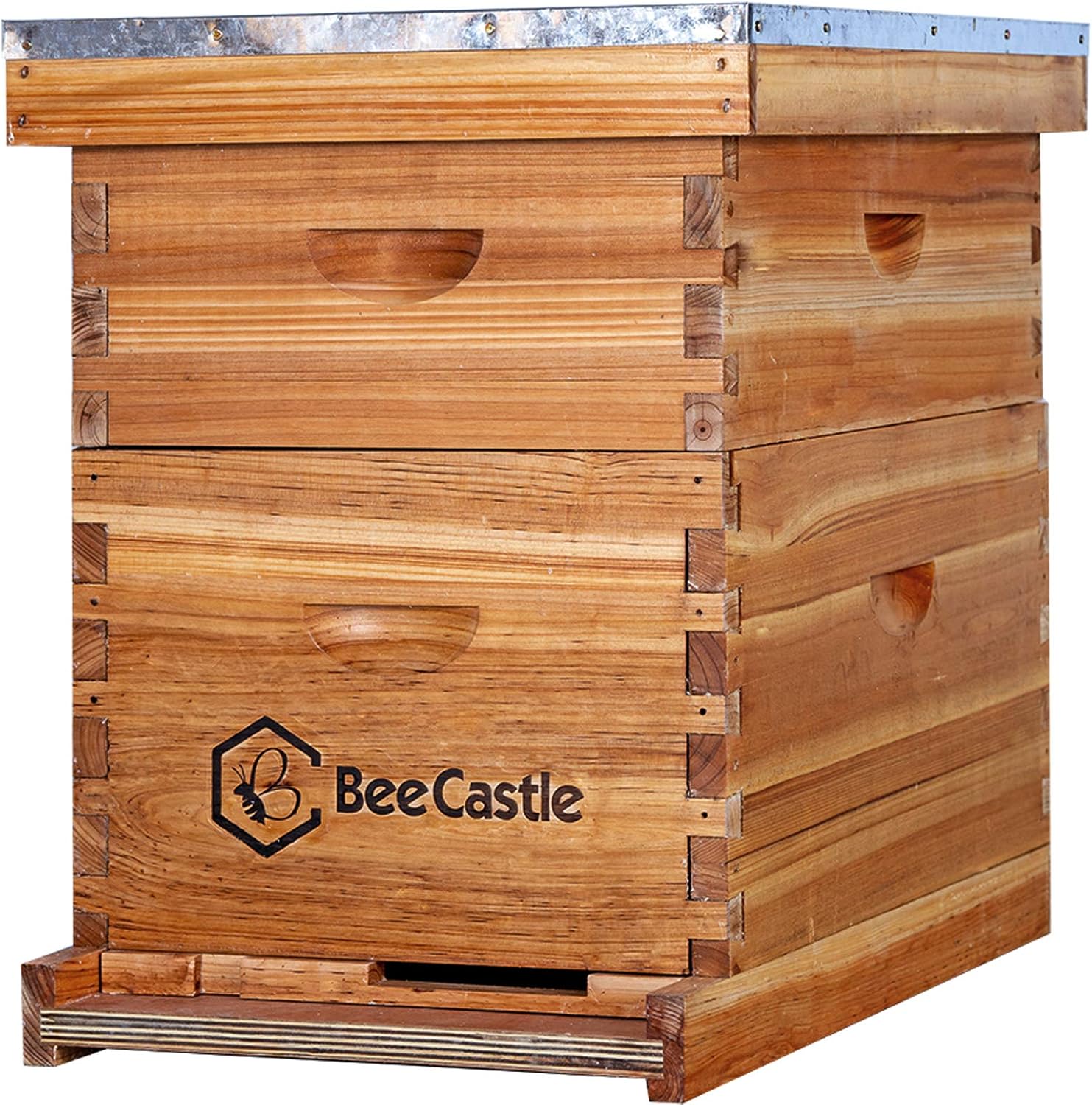
When to Add a Honey Super: First Box, Extra Space and Timing
Add a honey super when the colony is strong enough to occupy the extra equipment and needs space for an incoming nectar flow. For later supers, watch how quickly existing comb is filling and provide usable space before it becomes congested. Check whether your new frames contain drawn comb or foundation, and separate harvest management from supplemental feeding.
A date or a single frame percentage cannot describe every colony. A new nuc drawing its brood comb, a strong overwintered hive and a colony entering a nectar dearth need different decisions, even if their boxes look similar from outside.
Know which box you are adding
A honey super is a box assigned to surplus honey storage for harvest. A brood box is part of the space reserved for the queen, developing bees and colony food. Box depth alone does not establish its role: beekeepers can manage medium boxes as brood chambers too.
The University of Georgia’s equipment overview distinguishes brood chambers, harvest supers and queen-excluder placement. Decide which boxes make up your intended brood area before buying or installing the next box.
If you are still choosing equipment, our 8-frame versus 10-frame comparison explains the importance of a consistent system. Check box width, frame depth, foundation and cover fit before arriving at the hive.
The first honey super: check readiness in three parts
1. A colony that can occupy the space
Assess the actual bees and brood. Is the colony growing? Is brood development consistent with the season? Are the intended brood boxes well occupied, with usable comb being developed? A busy entrance is an observation, not a complete strength assessment.
A new colony may still need to establish its brood comb and food reserves. Adding every box supplied in a starter kit at installation can create a stack of equipment far larger than the working colony.
Mississippi State’s seasonal-management guide relates hive-space management to colony growth, incoming food and the intended honey crop. Its examples use a particular brood-box arrangement; follow the principle rather than assuming every hive requires the same number of boxes.
2. Nectar available or expected locally
Check local forage information, recent weather and fresh nectar in the hive. A calendar from another region can be useful for understanding the sequence of work while giving the wrong dates for your yard.
Ask a nearby beekeeper which major plants are producing, whether the flow is building or ending, and how their colonies are responding. Record the answer beside your own observations. Keep the distinction between visible flowers and nectar actually reaching the hive.
Cornell’s Northeast beekeeping calendar shows how equipment work, colony development and regional bloom fit together. Use a comparable local calendar where available, rather than copying an Ithaca month into a different climate.
3. A clear plan for food and the honey crop
A harvest super belongs to a different management phase from feeding an establishing colony. Michigan State Extension’s feeding guidance advises keeping syrup feeding separate from supers used to collect surplus honey for people.
Review any treatment currently in use as well. The exact product label determines whether harvest supers are permitted and whether other restrictions apply. Adding a box does not override a label condition. Put the product and relevant dates in the hive record before changing the setup.
The next super: measure remaining usable space
For an established colony already collecting a crop, inspect the filling pattern and rate of change. Consider how much usable comb remains, whether bees are occupying the existing super, and how much flow is still expected. Do not wait for every cell to be capped merely to make the decision easy to count.
Mississippi State’s honey-production guidance uses an example with six of ten super combs filled and beginning to be capped while the flow continues. It also describes roughly two-thirds nearly full as a practical trigger. Those figures are planning examples within its management setting, rather than a universal instruction for every hive.
A strong flow filling drawn comb can demand earlier preparation than a slowing flow over largely undrawn foundation. Keep the next compatible box ready so a developing need does not become an equipment-ordering delay.
What does a frame percentage actually mean?
“Seventy percent full” is incomplete without a definition. The advice might refer to frames drawn, frames covered with bees, cells holding nectar or frames of capped honey. Those observations answer different questions.
For example, eight frames with bees on them do not establish that eight frames are drawn and filled. Equally, a box with six filled combs and four untouched sheets of foundation has a different storage situation from one with four empty drawn combs. Write down what you counted instead of passing on an unexplained percentage.
Foundation and drawn comb change the decision
Drawn comb provides cells that can be used without first building the cell walls. Foundation requires construction before it offers the same storage. Give that difference weight when preparing for a flow.
Inspect stored comb for condition and an appropriate disease history before use. Confirm frame fit and restore the correct arrangement for the hive system. The BeeMD’s comb resource explains why missing frames and inappropriate gaps can create unwanted comb and difficult inspections.
If bees ignore new foundation, another empty super is not necessarily the answer. Work through our comb-building troubleshooting guide, checking food, population, season and the equipment itself.
Keep foundation frames spaced according to their intended system. Methods used to space fully drawn honey comb should not automatically be applied to a new box of foundation.
Add the box with a simple, prepared routine
- Confirm the purpose: brood expansion or a harvest super.
- Prepare sound, compatible equipment and suitable frames before opening.
- Choose appropriate weather and use your normal protective and safe handling setup.
- Complete the readiness checks and any management task that is due.
- If using an excluder, confirm the intended brood area and queen position before fitting the barrier.
- Set the super squarely, check for gaps and restore the covers securely.
- Record what was added and the question to answer at the next visit.
Our queen-excluder guide covers the placement decision. An excluder does not turn an otherwise unsuitable colony into one ready for a honey crop.
Plan the lift as the equipment gains weight. Keep a stable working surface and appropriate help available; avoid a tall stack you cannot manage safely during the next brood inspection.
Above or below the existing super?
Top supering puts the new box above the existing honey super. Bottom supering puts it beneath that box, while still above the intended brood area and any correctly placed excluder.
The honey-production guidance linked above describes limited evidence for a universal yield advantage of one method. Top supering can involve less lifting of already heavy boxes. Choose a method suited to your equipment, physical limits and local instruction, then record the arrangement so the next inspection is clear.
Do not move an empty box between brood boxes simply because you heard someone recommend putting a super “underneath.” Ask what their term means and which part of the hive they intend to expand.
Three follow-up decisions
The new box is being worked and filling: Monitor usable space and flow progress. Prepare additional equipment if the observed rate justifies it.
Bees scarcely enter it: Recheck colony need, foundation, access and nectar conditions. Avoid interpreting an unused box as proof of a queen problem or an instruction to feed a harvest super.
The flow has ended and the colony is contracting: Reassess excess space with local guidance. Empty equipment is not valuable simply because it is on the hive. Review our wax-moth and small-hive-beetle comparison when inspecting comb condition.
The date of the next check should reflect colony growth and the task due. Our inspection-interval guide helps turn that into a workable schedule.
Questions about adding honey supers
Will adding a super prevent swarming?
Providing suitable space is one management tool, not a complete swarm-control plan. If queen cells are present, establish their significance and get timely advice. Use our queen-cell comparison before making assumptions.
Can I add a honey super too early?
Yes. Extra space that the colony cannot occupy or protect can create management problems. Base expansion on the bees, usable comb and forage instead of the number of boxes you own.
Should I wait until the first super is completely capped?
Not automatically. A continuing flow may require more storage before that point. Capping is also different from the separate question of available room for incoming nectar.
Does adding a super mean the honey is ready to harvest?
No. Supering is a space decision. Harvest requires a separate readiness assessment, described in our honey-harvest guide.
Should I add two supers at once?
Some strong colonies on major flows can use multiple additions, while others cannot. Assess expected demand, colony strength and whether the comb is already drawn. Begin with a locally supported plan you can monitor and handle safely.
Sources checked November 10, 2026. Timing depends on local forage, colony strength and the hive system.
Equipment Mentioned in this Guide